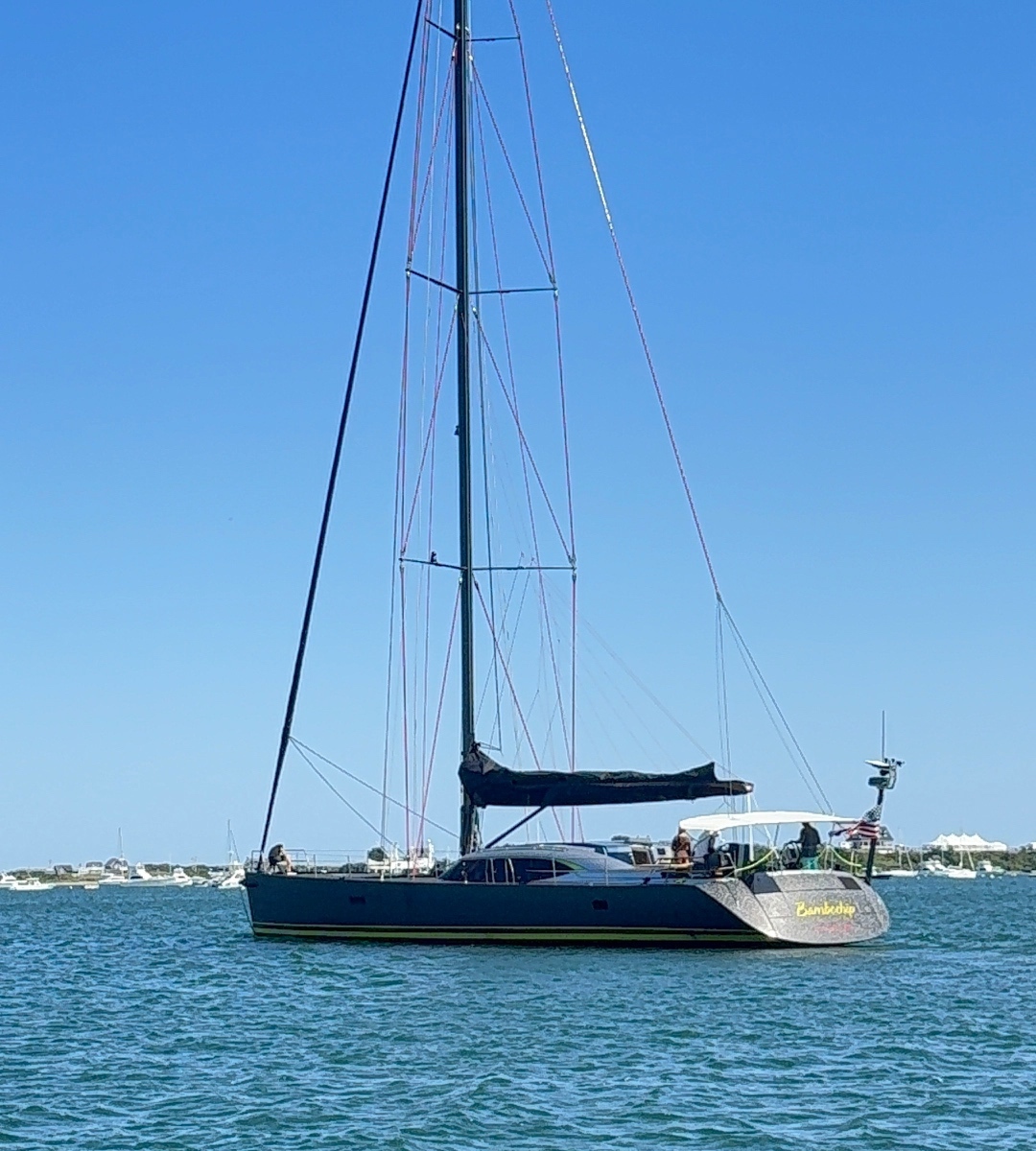
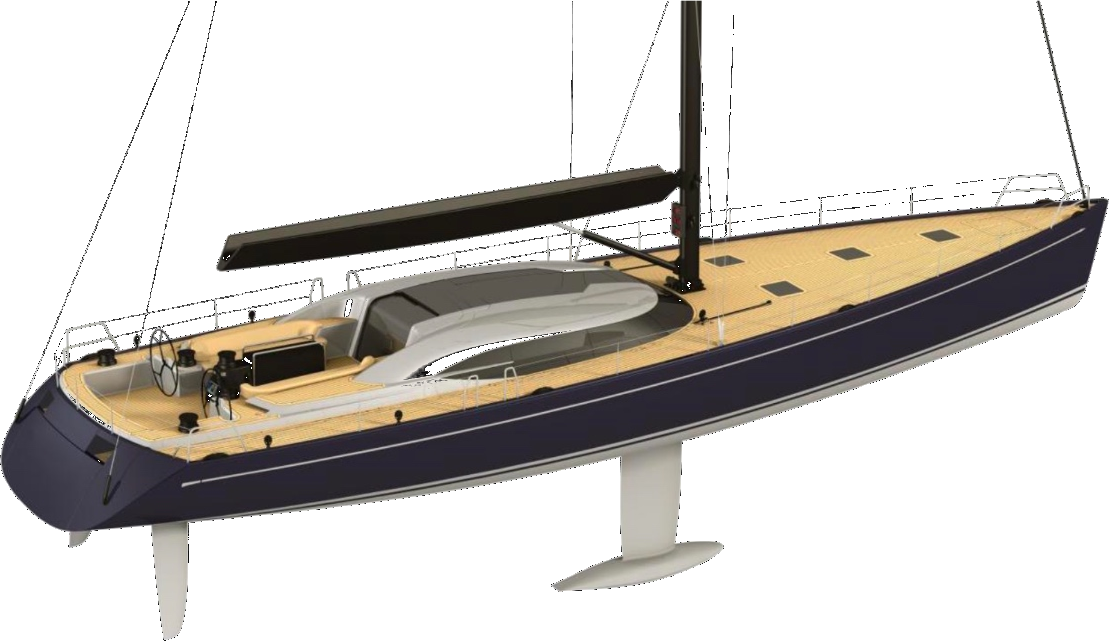
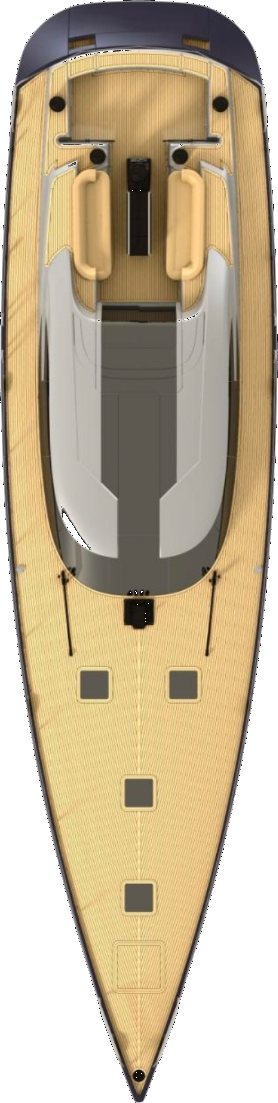
The interior was designed by Rhoades Young, an award-winning studio whose portfolio is dominated by superyachts of considerably greater length. Their involvement in an eighty-foot sailing yacht reflected both the ambition of the commission and the personal relationship with Bruno Bich, who demanded a standard of living aboard that matched the engineering beneath the skin.
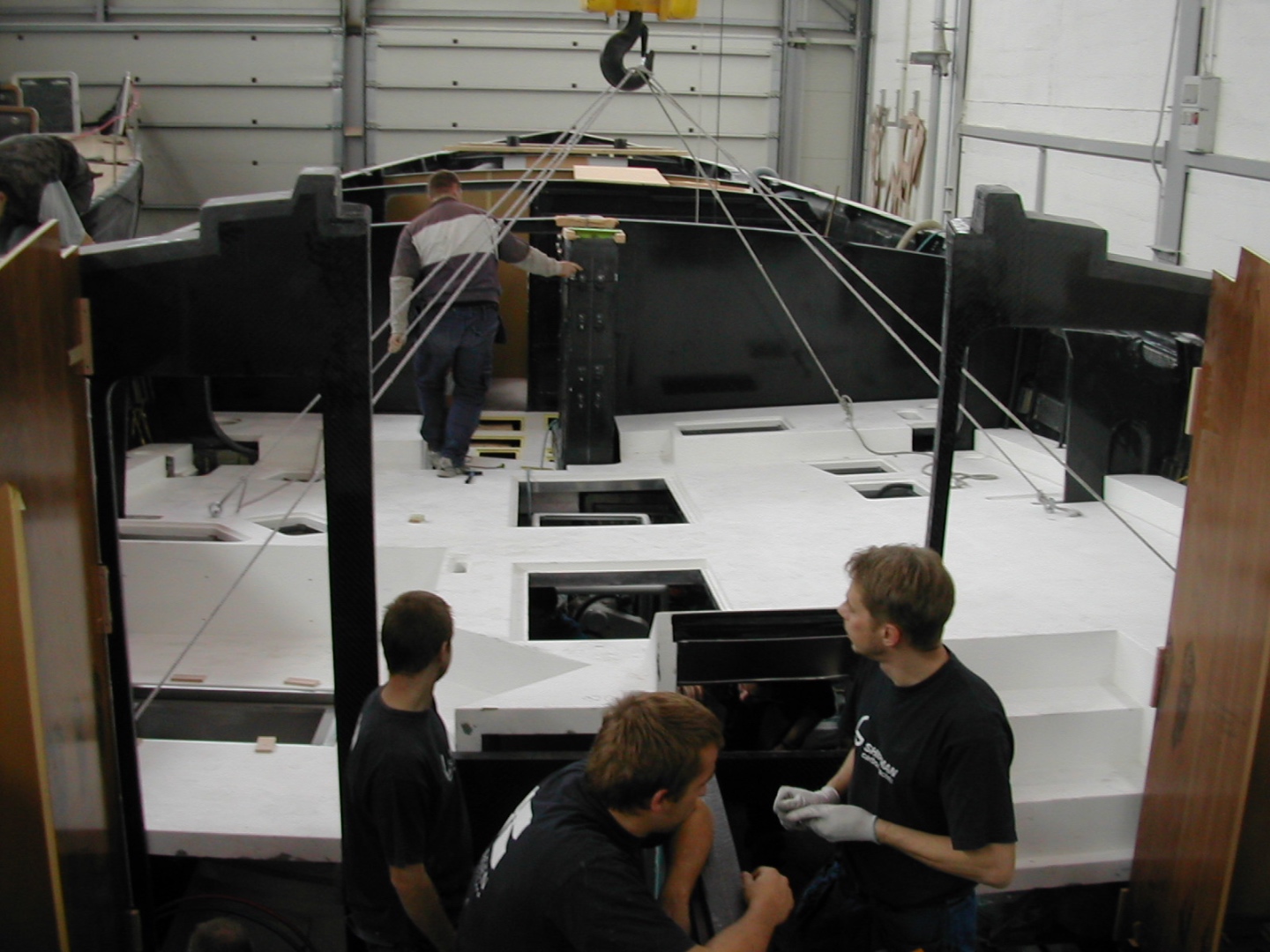
The visual impression below decks is of rich, warm timber, the kind of hand-finished joinery one associates with the finest motor yachts. The reality is more technically remarkable. Every surface that appears to be solid wood is in fact a thin veneer, vacuum-bagged over a foam-core sandwich panel. Doors, cabinets, drawers, bulkheads, and furniture are all constructed this way. A cabinet door, for instance, which on a conventionally built yacht might weigh several kilograms, balances on a single finger.
This is the governing paradox of Bambochip's interior: it is more luxuriously appointed than most sailing yachts of comparable size, yet every element has been engineered to contribute to the vessel's exceptional lightness. The luxury is not in spite of the performance; it is a consequence of the same obsessive engineering that produced the carbon hull and the titanium deck hardware.
The accommodation plan provides for an owner's suite, guest cabins, and crew quarters arranged to preserve both privacy and sociability. This layout was refined through Bruno's years spent on various boats. The goal for Bambochip was unique. She was to be both a high-performance sailing yacht as well as a floating luxury-hotel, and the distinction between them had to dissolve entirely.